Five Years In The Wild Didn’t Break The Bond Between A Gorilla And The Man Who Raised Him
When conservationist Damian Aspinall returned to the jungles of Gabon, he carried one question in his heart. Would Kwibi, the gorilla he had raised from infancy and released into the wild five years earlier, still remember him? Kwibi had grown up at Howletts Wild Animal Park in England before being reintroduced to the forests of…
When conservationist Damian Aspinall returned to the jungles of Gabon, he carried one question in his heart. Would Kwibi, the gorilla he had raised from infancy and released into the wild five years earlier, still remember him?
Kwibi had grown up at Howletts Wild Animal Park in England before being reintroduced to the forests of West Africa as part of a conservation program. Now ten years old, he was larger, stronger, and fully wild, with no reason to trust a human again.
There was also real danger. Kwibi had reportedly charged strangers before, and even Damian admitted, “You never know. He is a wild animal now.”
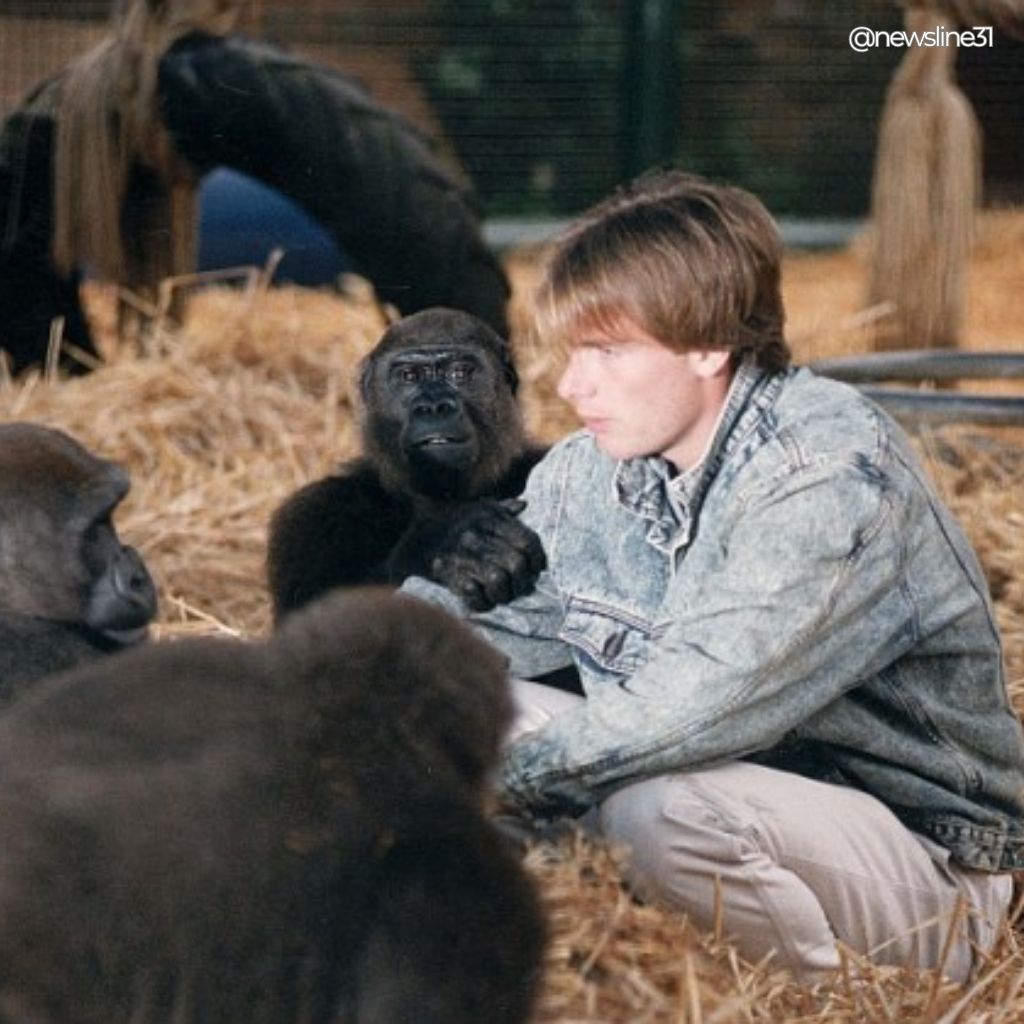
Still, Damian was determined to try. “Deep inside, you believe that things will be OK,” he said quietly.
For hours, Damian traveled by boat along the river, calling out in the same deep voice he had used years before. “Come on then. Come on,” he called, hoping the sound would reach somewhere memory still lived.
Then, around a bend in the river, Kwibi appeared. The now-magnificent gorilla stepped to the water’s edge, drawn not by sight, but by a voice he recognized.
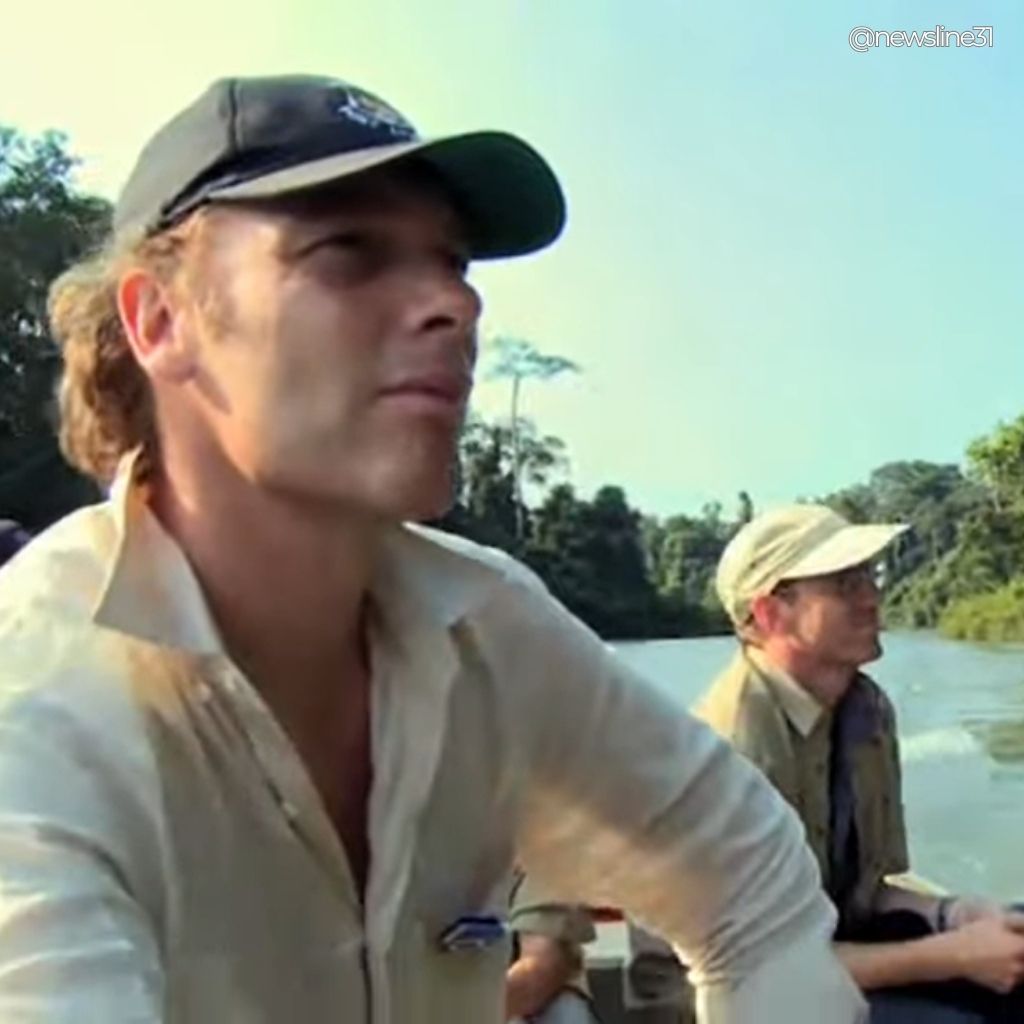
As Damian climbed out of the boat, fear lingered for a moment. But everything changed when he heard a sound he knew instantly.
“The moment I heard the gurgle — gorillas have a gurgle, and it’s a very deep love gurgle — I knew I’d be OK,” Damian said. “Right at that moment, everything stopped.”
Kwibi looked directly into Damian’s eyes with an intensity filled with calm and affection. “He looked at me with such love,” Damian later recalled, “and it was just incredible.”
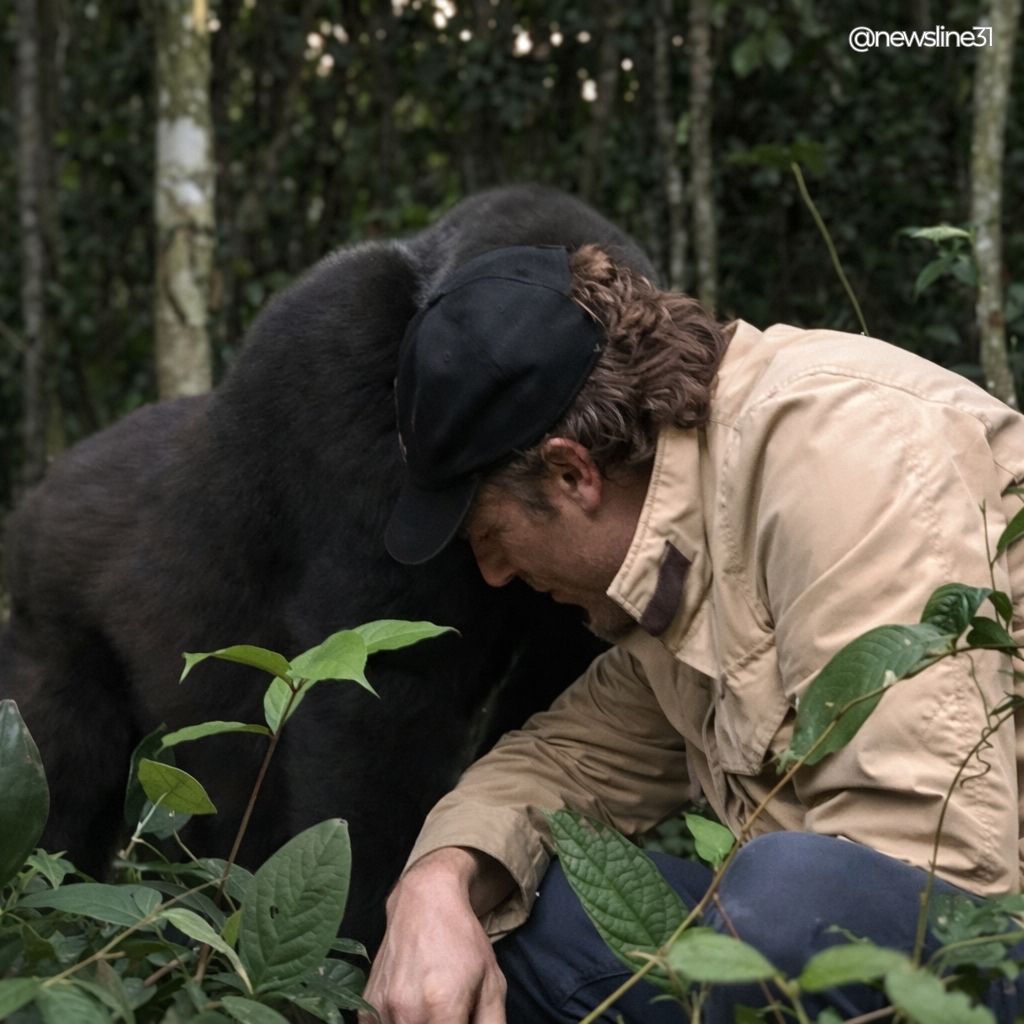
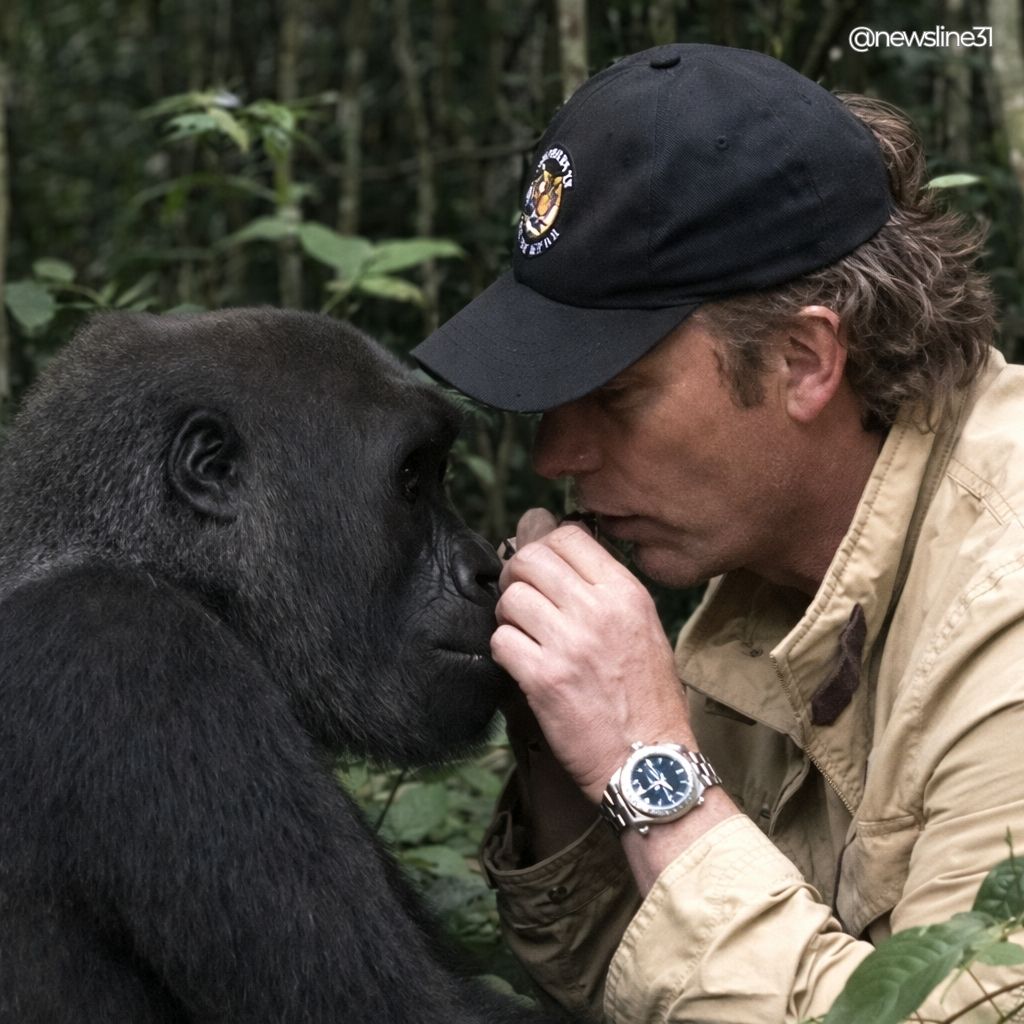
The two sat together in silence, touching noses, exchanging soft sounds, almost drunk on the closeness of the moment. Kwibi embraced him like someone who had waited years to come home.
Slowly, Kwibi introduced Damian to his family. His wives approached cautiously, watching the stranger who clearly mattered deeply to him.
When Damian finally returned to the boat, Kwibi refused to let the reunion end. He followed the boat down the river and later built his nest directly across from Damian’s camp.
“All night long, he was calling for me,” Damian said. “It was extraordinary.”
At dawn, Damian stepped into the river for a swim, and Kwibi appeared again on the opposite bank. “I can see you,” Damian called softly, still amazed.
The moment later reached millions around the world, not because it was staged, but because it felt undeniable. It showed memory, trust, and emotional connection surviving time, distance, and wilderness.
For people like Damian Aspinall, this truth is not surprising. It is the reason he has dedicated his life to protecting primates, returning them to the wild, and reminding the world that compassion is not uniquely human.
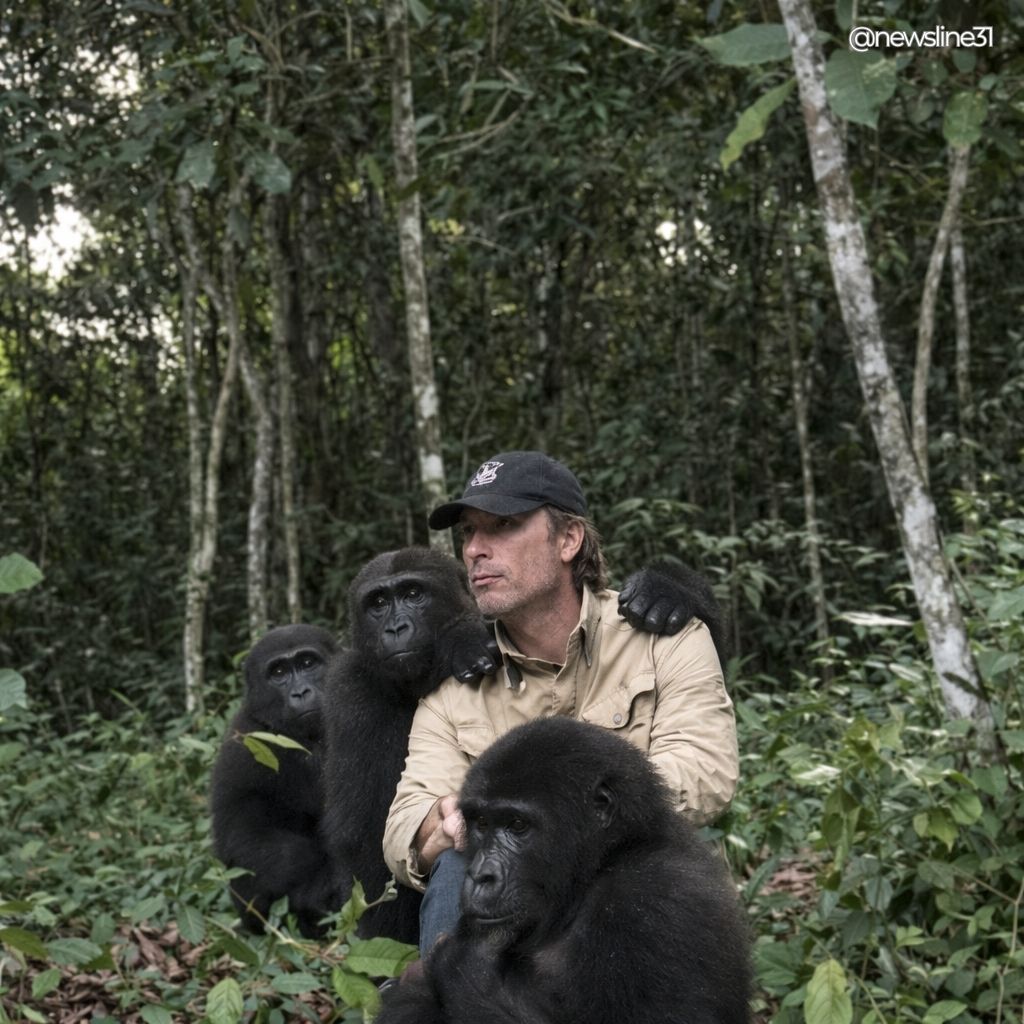
Today, more than half of all primate species face extinction, not because they lack intelligence or feeling, but because humans have taken too much and given too little back. Encounters like this one challenge the idea that nature is cold and unfeeling, when in reality, it often reflects the care it is given.
The lesson is simple, yet powerful. When humans choose responsibility over dominance, and protection over profit, the natural world responds with resilience and grace.
Supporting conservation, protecting habitats, and respecting wildlife from a distance are meaningful ways to honor moments like this. Every effort, no matter how small, helps ensure that future reunions remain possible.
Kwibi returned to his life in the jungle, and Damian returned to his work, each carrying the memory of the other. And in that shared moment, the line between human and animal felt a little less distant, offering hope for a future built on understanding rather than loss.